A monologue is the loneliest job on a television set. One actor, one long speech, no scene partner to bounce off, and a camera that will not cut away to hide the seams. Done well, it can carry an entire episode. Done badly, everyone notices within seconds.
The good news, working actors and acting teachers agree, is that the craft is learnable. The core skills are the same whether the speech runs ninety seconds or five minutes: know who is being talked to, break the text into beats, and treat a solo speech as a conversation that happens to have only one audible voice. According to The Conversation, in a guide written by a former stage and television actor turned drama researcher, monologues are "the purest form of storytelling an actor can engage in" — purest because nothing is hidden. Every choice is on screen.
What actually makes a monologue hard?
The difficulty is not the length. It is the absence of a partner. In a normal scene, the other actor hands over reactions, and the performance is built in the exchange. In a monologue, the actor has to generate both sides of that exchange alone, while staying believable enough that the audience forgets there is no one in the room. This connects to our earlier piece, Phoebe Waller-Bridge and the One-Woman-Show Route to an Empire.
Acting coach T. Bell, writing for the TBell Actors Studio, puts the failure mode plainly: most monologues fall flat because the actor performs as if nobody is listening. The fix, the studio's guide argues, is treating the monologue like a dialogue — imagining how the silent listener reacts line by line, because an imagined laugh produces a very different next line than an imagined sneer. Talking to someone rather than at them is the difference between a performance and a recitation.
Television adds its own pressure. A speech that would get one shot in theatre gets many, and each take has to be rebuilt from scratch. That is where preparation does its real work.
How do actors break down the text before they shoot?
Preparation starts with the pencil, not the voice. The standard method is to mark the script into beats: the moments where the character starts thinking or talking about something new. The Conversation's guide recommends exactly this, and suggests that some beats be played with a contrasting tone or pace, so the speech has shape instead of running at one emotional temperature for its full length.
Alongside the beats, actors assemble the character's inner life from clues. How does this person talk about themselves? Do they complain, deflect, argue? Many performers also write out a backstory the audience will never see — imagined key memories that serve as an emotional anchor when a take requires them to arrive at grief or rage on cue. The guide describes journalling and visualisation as common tools for building that private scaffolding.
One more choice gets decided early: how prepared is the character to say all this? A lawyer delivering a closing argument is polished and knows exactly what comes next. A spouse blowing up mid-argument is stumbling into the words as they arrive. Same length of speech, completely different texture — and the actor has to know which one the scene needs before the first take.
What changes when the monologue moves to camera?
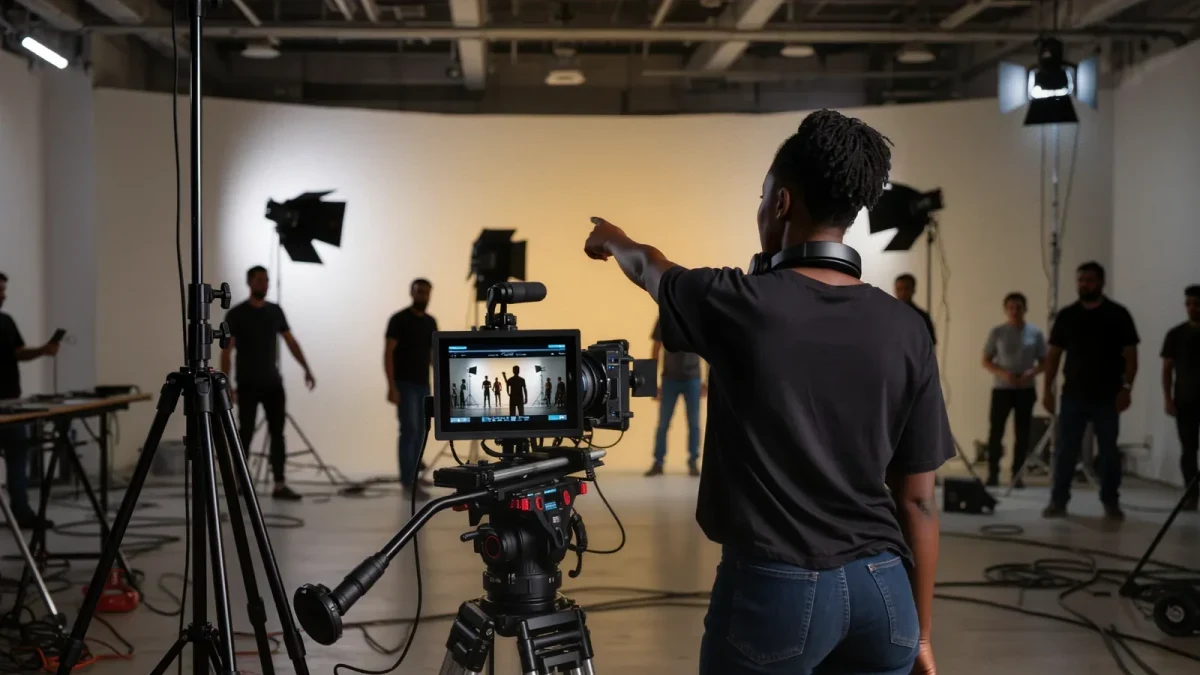
On stage, the actor controls the space. On a television set, the director and the lens do. Where to look is not the actor's private decision; the working advice is simply to ask whoever is running the audition or the shoot where they want the eyeline, because a speech delivered to a camera operator standing two feet from the lens reads very differently from one delivered off-camera to a reader.
Movement is similarly negotiated. A shift in position — standing, sitting, stepping toward the lens — can land powerfully, but only if it is motivated by a shift in the character's thinking. The Conversation's guide is firm on this: physical choices must come from an inner impulse, not from a plan to make the shot more interesting. Directors can tell the difference, and so can viewers.
Then there is stamina. A long emotional speech might be shot in a master covering the whole thing, plus close-ups of portions of it, plus coverage of the listening actors — meaning the performer delivers the full speech many times in a day, at full intensity each time. This is why professionals choose material they can reproduce reliably rather than material they can reach only on a good day.
Why is take management the hidden skill?
Television schedules do not allow an actor to find a monologue on set. The performance has to be built in rehearsal and then reproduced, take after take, with the emotion arriving fresh each time rather than draining. Actors who treat a take as a one-time miracle struggle; actors who have done the beat work can return to the same internal shifts on demand.
The practical logic echoes what acting teachers drill into students for auditions. Bell's advice to students is to pick a piece they can deliver an undeniable performance every single time, not one they can nail half the time — and the same standard applies on set, where a take that only works occasionally is a take the schedule cannot afford. Memorisation has to be total, too: an actor still reaching for lines cannot commit to anything else the performance requires.
There is also the question of what the speech is for. Bell warns against monologues that exist mainly as voice-over — passages that simply deliver information the plot needs. Speeches built from facts leave little to perform. The monologues that become career moments are the ones where a character is trying, in the moment, to change something: to persuade, to confess, to wound. The information is a byproduct. The attempt is the scene.
What this means for viewers
Our analysis: the famous television monologue is easy to misread as a writing achievement alone, and the writing does matter — the beats have to exist on the page before an actor can find them. But the performances that linger are acting achievements built on unglamorous technique: a mapped-out inner journey, a clearly imagined listener, physical choices tied to thought, and the stamina to make the twelfth take feel like the first. When a solo speech stops a scene cold, what you are watching is preparation, not inspiration.
That is also why these moments reward rewatching. The second time through, you can watch the structure — where the beat turns, where the pace shifts, where the character almost loses the thread — instead of waiting to see what happens. The craft is all there on the surface, once you know what to look for. For more on the people who build television this way, the profiles collection follows the writers, directors and performers whose working habits shape what ends up on screen, from Regina King's move behind the camera to Phoebe Waller-Bridge's route from one-woman show to empire. Readers following this should also see Regina King: The Actor Who Built a Second Career Behind the Camera.